Guide 03 / Gear
Spray equipment
The material decides the machine. Thin paints flow through simple guns, while fast setting coatings need equipment that heats, meters and mixes two parts at the gun.
HVLP and conventional guns
High volume, low pressure guns use air to break up thin coatings into a soft spray. They give fine finishes on furniture, cabinets and car parts with little overspray, but they are slow over large areas.
Airless sprayers
An airless pump pushes coating through a small tip at high pressure. It covers walls, roofs and decks quickly and handles thicker paints. Tip size sets the fan width and flow, so match it to the product.
Plural component rigs
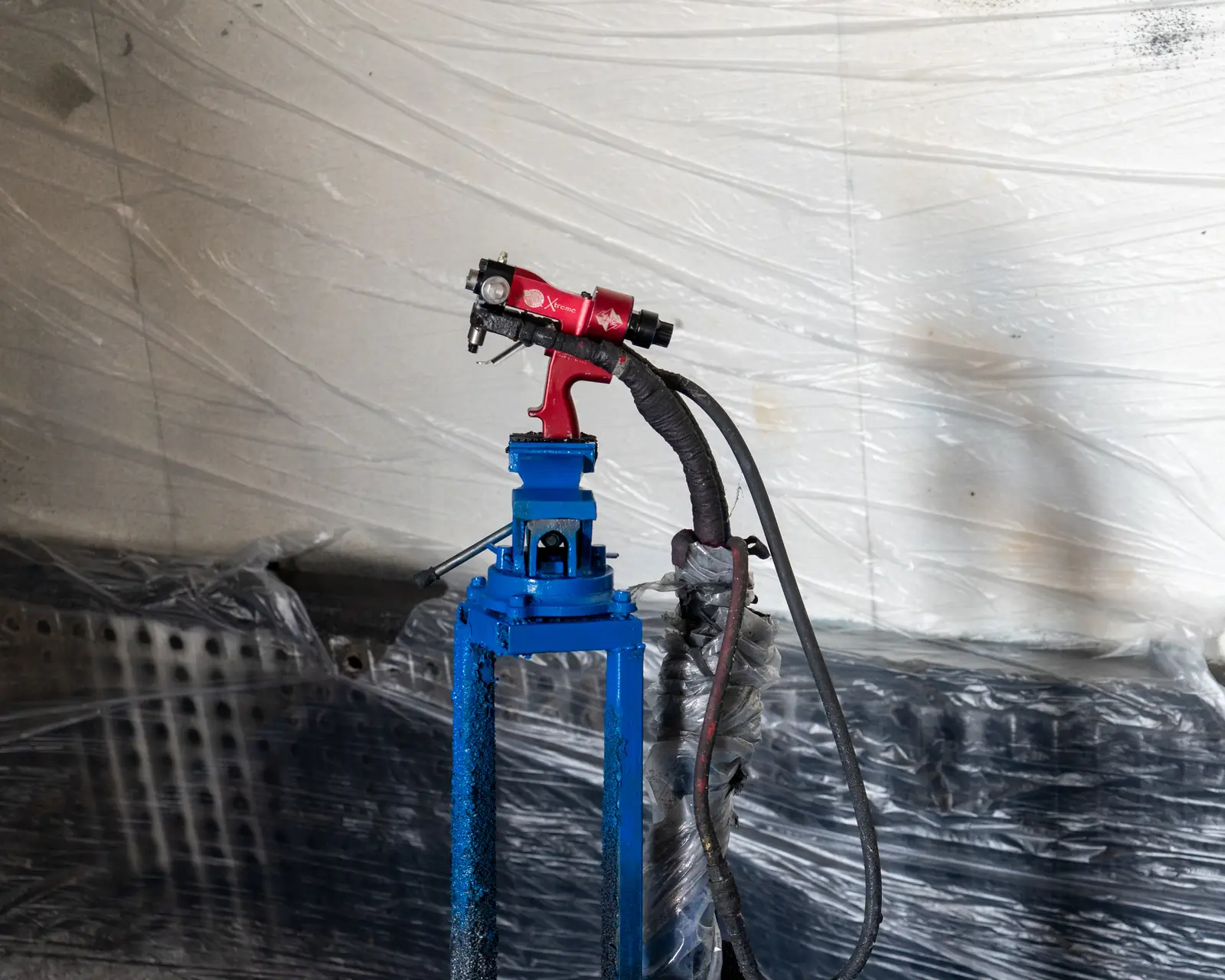
Fast setting coatings such as polyurea arrive as two parts. A proportioner heats each part, meters it at the right ratio and sends it through heated hoses to a gun that mixes them at the tip. These rigs are usually mounted in a trailer or truck.
Safety and ventilation
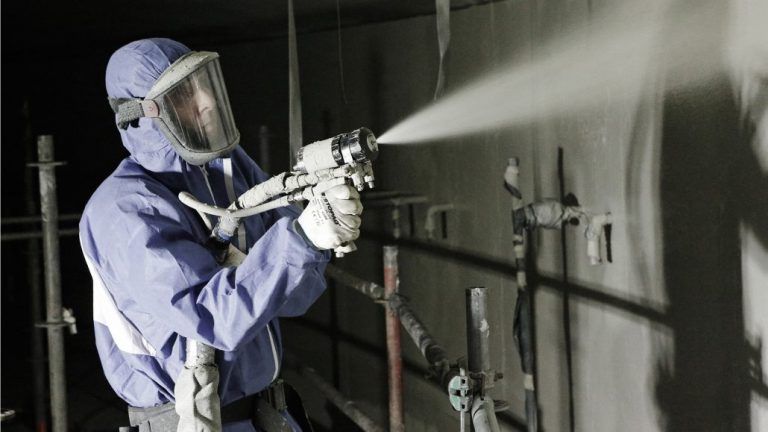
Spray mist can be breathed in and can drift. Use the respirator, suit, gloves and eye protection the safety data sheet calls for, ventilate enclosed spaces and keep people who are not suited up away.
Do
- Clean the gun and lines right after use
- Keep spare tips and seals
- Check pressure and temperature before each coat
- Practice on scrap first
Avoid
- Wrong tip size for the material
- Skipping the respirator
- Letting mixed material cure in the gun
- Spraying in wind
Common questions
Do I need a plural component rig?
Only for coatings that are supplied as two parts meant to be mixed at the gun. Most paints, primers and roof coatings spray well through an airless unit.
General information only. Follow the product data sheet and safety data sheet for the coating you use.