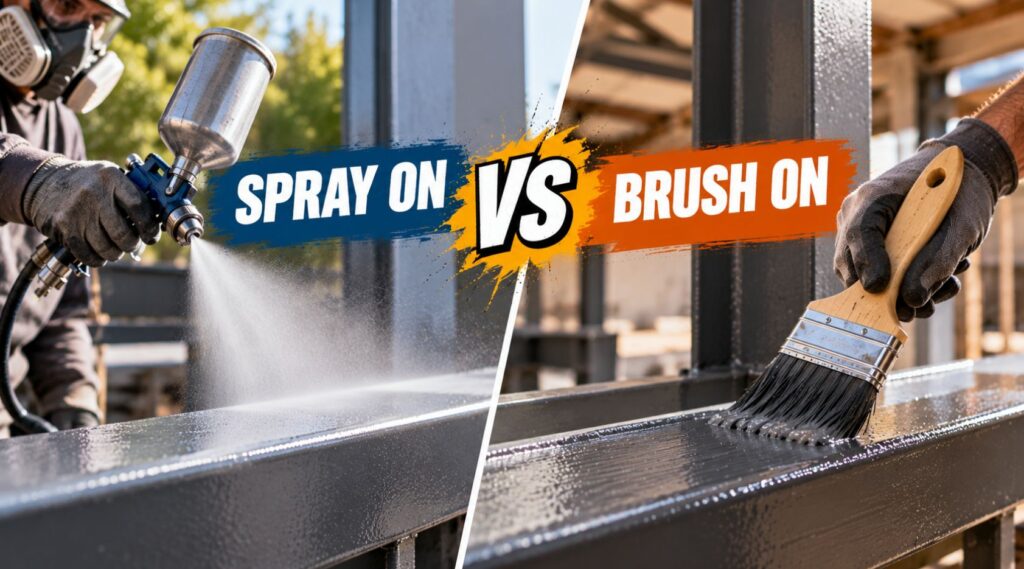
Spray
Even film, fast on big or uneven areas.
Suits
- Large or textured surfaces
- Seamless, lap free finish
- Thick builds in fewer passes
Watch for
- Masking and setup time
- Overspray and drift
- Gear and protective kit
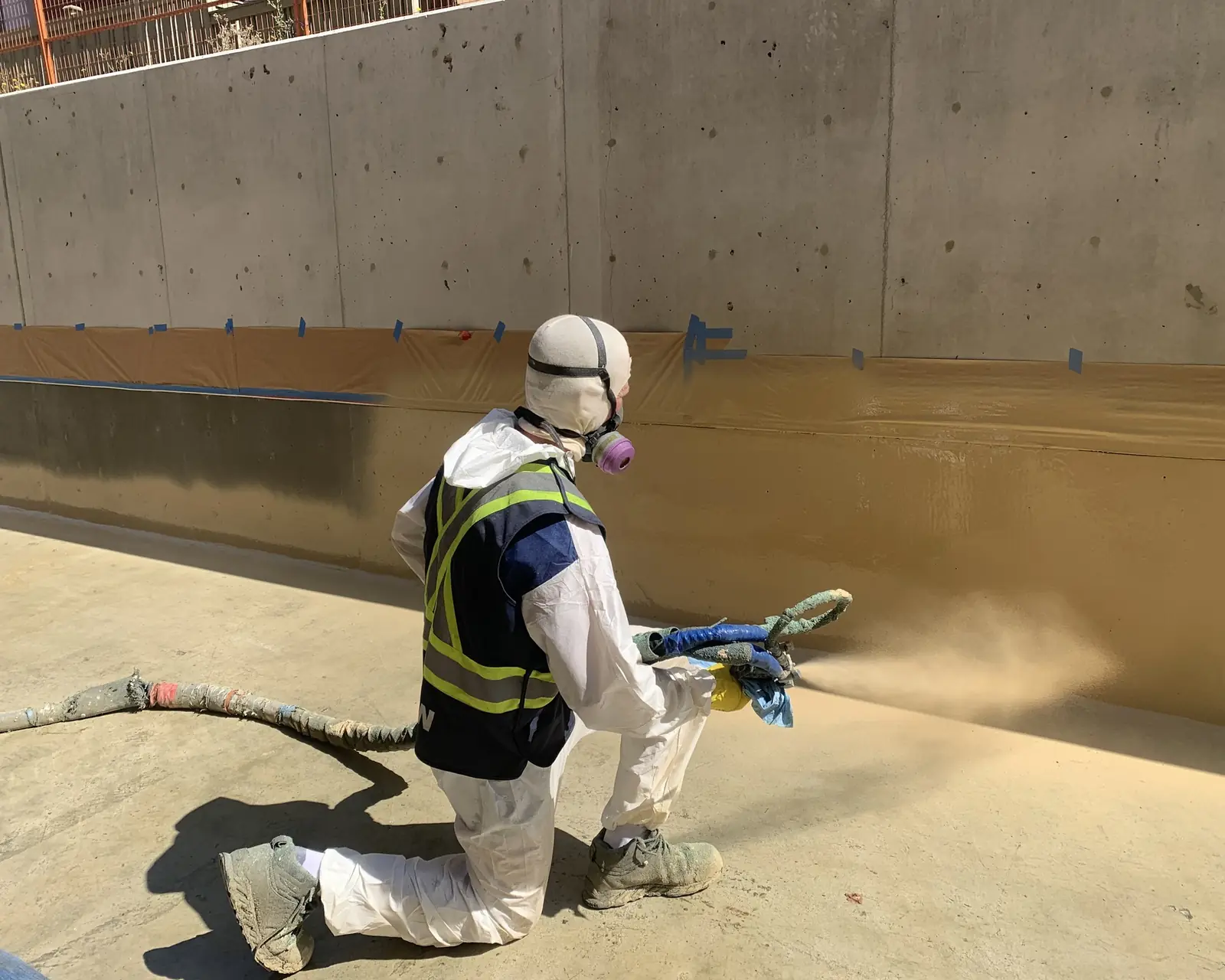
A field guide to spray applied coatings
How spray coatings work, how they compare with a brush and roller, and what it takes to get a finish that stays put.
Every topic on the site, laid out like a periodic table. Large tiles are guides and tools, small tiles are reading and reference.
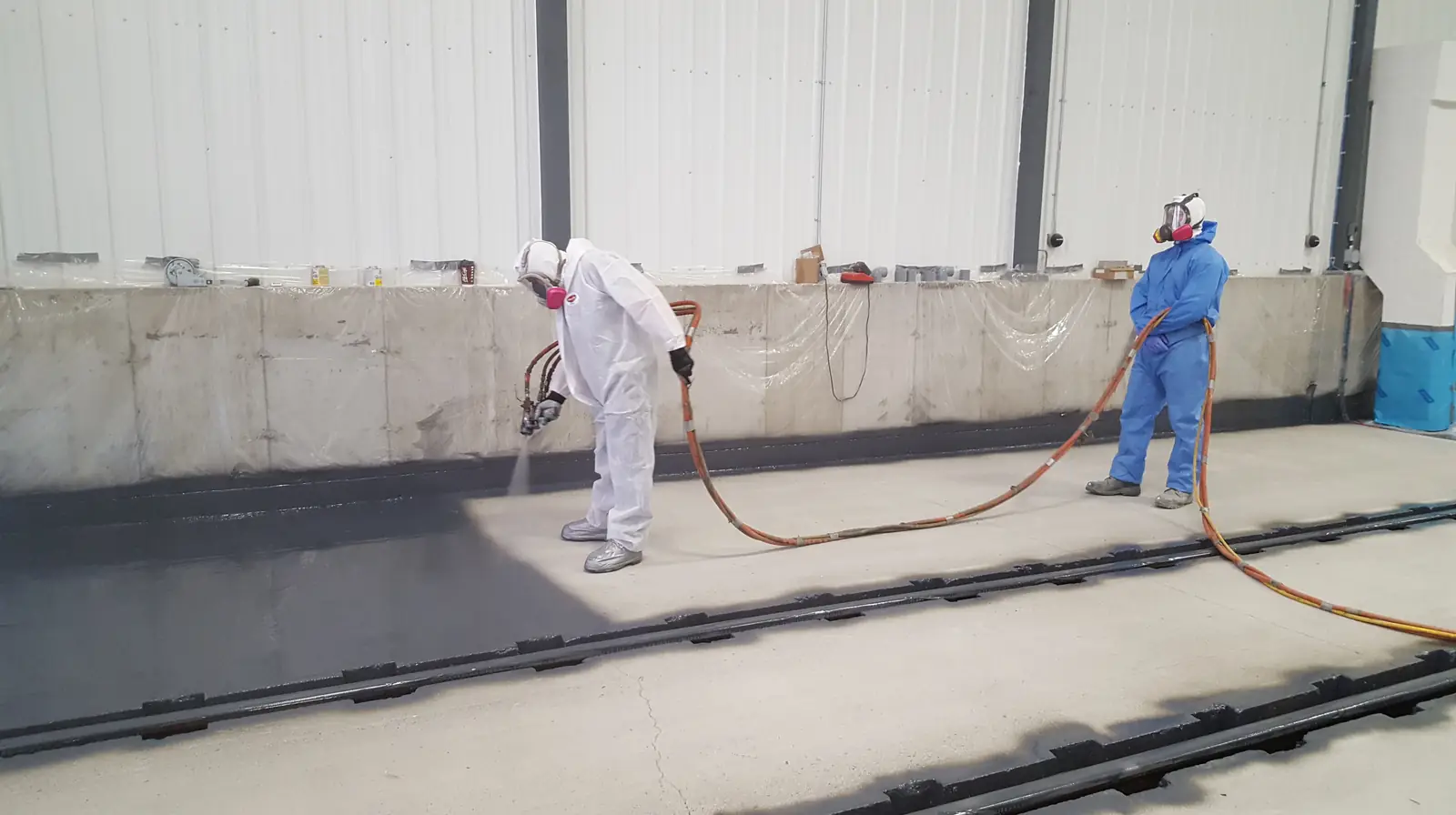
The finish you see is decided by the prep you do not.
Most spray coating problems trace back to the surface underneath: moisture, dust, oil or a profile that is too smooth to grip.
Five steps
Five steps, in this order, every time.
Read the prep guideClean, profile, repair and dry the surface. Mask what stays clean.
Apply the primer the data sheet calls for, if any, inside its recoat window.
Overlap each pass by about half, keep the gun square and moving, check wet thickness.
Give it the time and temperature the product needs before traffic.
Look for pinholes, thin spots and runs, and touch up while recoat is still possible.
Calculator
Enter the area and the target thickness from the data sheet. The calculator allows for solids, overspray and extra coats.
Methods
The coating can be the same. The method changes the finish, the speed and the cleanup.
Even film, fast on big or uneven areas.
Suits
Watch for
Control for edges and small jobs.
Suits
Watch for
A steady middle ground on flat areas.
Suits
Watch for
You spent a whole weekend on that railing. Scraped it, wiped it down, brushed on the coating, stood back with a cold drink and…
FAQ
Neither is better for every job. Spraying is faster on large or uneven surfaces and leaves an even film. Brushing gives more control on small areas and edges. See spray, brush or roll.
The product data sheet gives a target dry film thickness, usually in mils or microns. A wet film gauge used during spraying helps you hit it.
It depends on the area, the thickness, the solids content and how much is lost as overspray. The coverage calculator gives a starting estimate.
Cure times range from seconds for some polyureas to days for some epoxies, and they change with temperature and humidity. Follow the data sheet for foot traffic, vehicle traffic and full cure.
Many paints and roof coatings can be sprayed with rented airless equipment after some practice. Fast setting two part coatings need specialist rigs and training, so they are usually applied by trained crews.