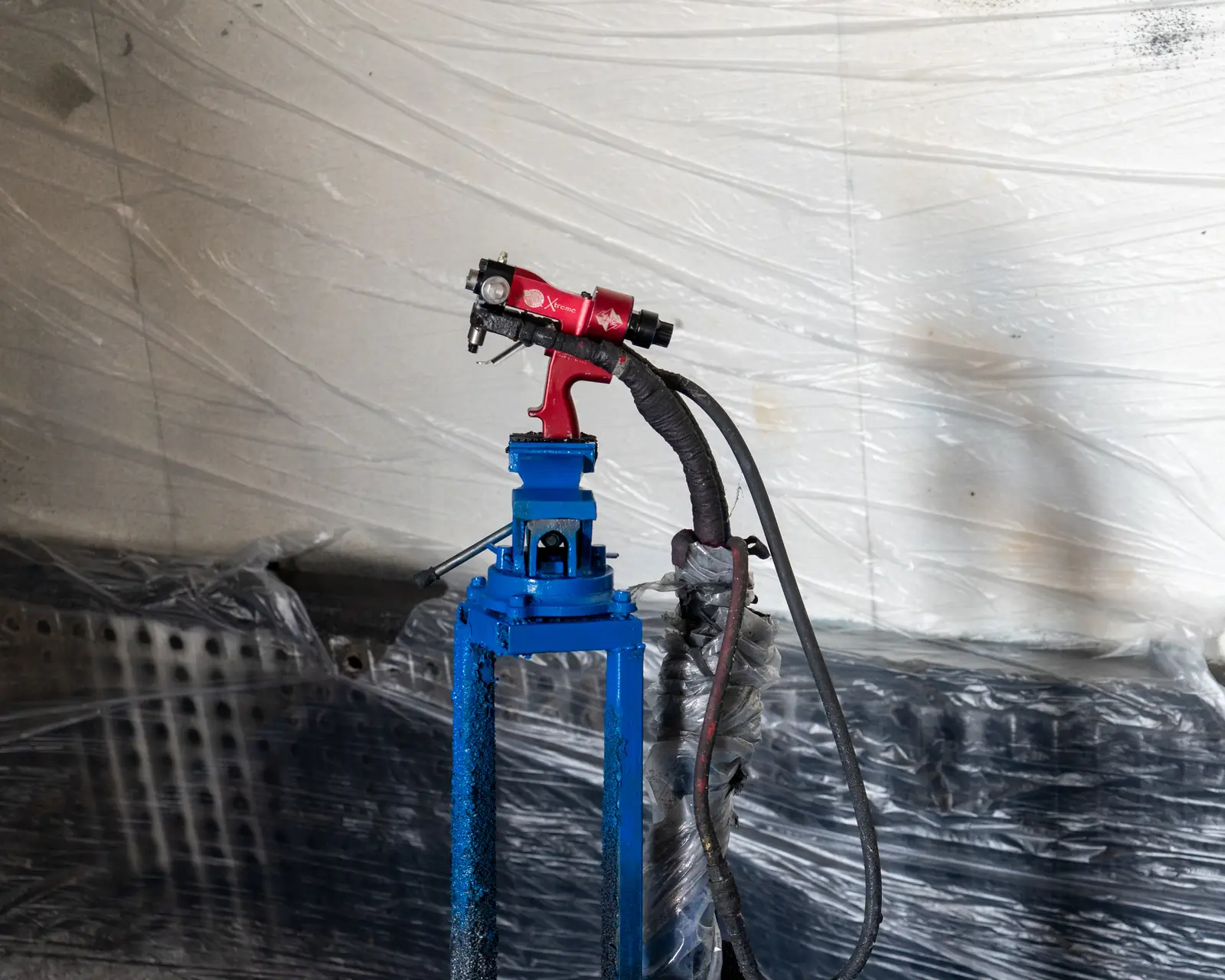
spray on coating

Four short guides

Learn the basics

Four short reads that cover most of what decides how a spray coating turns out. Start with prep. It matters more than anything else.

01 / Prep

Surface preparation

A coating can only hold on as well as the surface underneath lets it. Most peeling, blistering and flaking starts here, long before the gun comes out.

  • Clean off oil, dust and loose material
  • Give smooth surfaces some tooth
  • Repair cracks and holes first
  • Spray only on a dry, warm enough surface
02 / Types

Coating types

Spray coatings share a method, not a chemistry. Each family behaves differently, so the right one depends on the surface, the conditions and the job it has to do.

  • Polyurea cures fast and stays flexible
  • Polyurethane balances toughness and finish
  • Epoxy bonds strongly and resists many chemicals
  • Acrylic and silicone suit weather exposure
03 / Gear

Spray equipment

The material decides the machine. Thin paints flow through simple guns, while fast setting coatings need equipment that heats, meters and mixes two parts at the gun.

  • HVLP for fine finishes on small parts
  • Airless for paints, primers and roof coatings
  • Plural component for fast setting coatings
  • Protective gear for every setup
04 / Uses

Where spray coatings are used

Spraying shines on large, uneven or awkward surfaces where a brush would leave laps and a roller cannot reach.

  • Truck beds and vehicle parts
  • Roofs, decks and balconies
  • Floors, walls and tanks
  • Docks, boats and marine structures

Next step

Prep first, then estimate the material.