Guide 02 / Types
Coating types
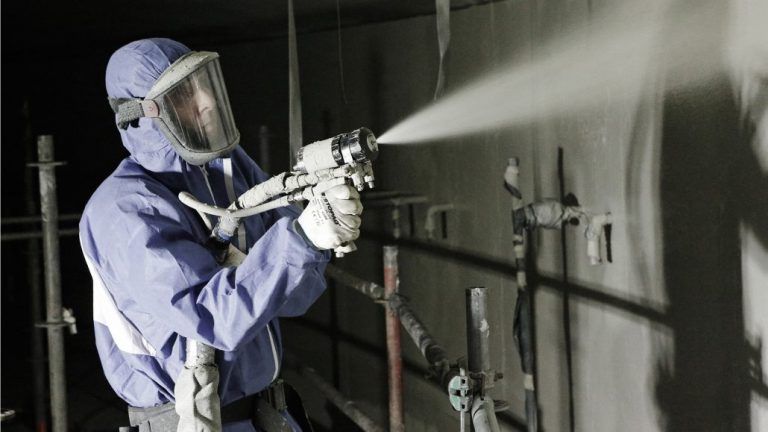
Spray coatings share a method, not a chemistry. Each family behaves differently, so the right one depends on the surface, the conditions and the job it has to do.

Polyurea
Polyurea reacts within seconds of mixing at the gun, so it builds thick layers quickly and can be walked on soon after. It needs heated plural component equipment and trained hands. It is common on truck beds, roofs, tanks and floors.
Polyurethane
Polyurethane coatings come as hard finishes, flexible membranes and foams. They tend to cure slower than polyurea, which gives a little more working time. Some are aliphatic, which holds color better in sunlight.
Epoxy
Epoxy grips concrete and steel well and resists many chemicals, which makes it a common primer and floor coating. It can chalk and yellow in direct sun, so it often gets a topcoat outdoors.
Acrylic and silicone
Water based acrylics are easy to handle and suit roofs and walls in mild climates. Silicone holds up to sun and ponding water on roofs. Both are usually sprayed with ordinary airless equipment.
Do
- Match the coating to the surface and exposure
- Check primer requirements
- Ask about recoat windows
- Compare data sheets side by side
Avoid
- Choosing on color alone
- Mixing brands between primer and topcoat without checking
- Ignoring UV exposure
- Assuming every coating flexes
Common questions
Which type lasts longest?
It depends on the surface, the prep, the thickness and the exposure. A well applied coating matched to its job usually outlasts a stronger product applied badly.
General information only. Follow the product data sheet and safety data sheet for the coating you use.